
ISMS software
ISMS software: steer information security instead of administering it
Policies, risks, controls and evidence in one system instead of spreadsheets and folders. Your team gets from scope to audit without parallel lists and maintains every piece of information once.


 5.0 out of 5
What an ISMS is and what it must deliver
An information security management system turns security from a collection of documents into an operating cycle. Scope, assets, risks, controls, responsibilities and evidence must stay connected so the organisation can decide, implement, review and improve from one current state. The usual foundations are ISO 27001 and BSI IT-Grundschutz.
KaitoSec gives that cycle a shared data model. A changed asset can trigger a risk review, a treatment can point to its control and the approved evidence remains attached to the decision an auditor needs to understand.
ISMS software versus Excel and legacy GRC
Excel is useful for a first inventory, but it cannot reliably maintain relationships, approvals, review dates and version history across a growing ISMS. Legacy GRC suites add structure, yet often require long configuration projects before the team can do useful work.
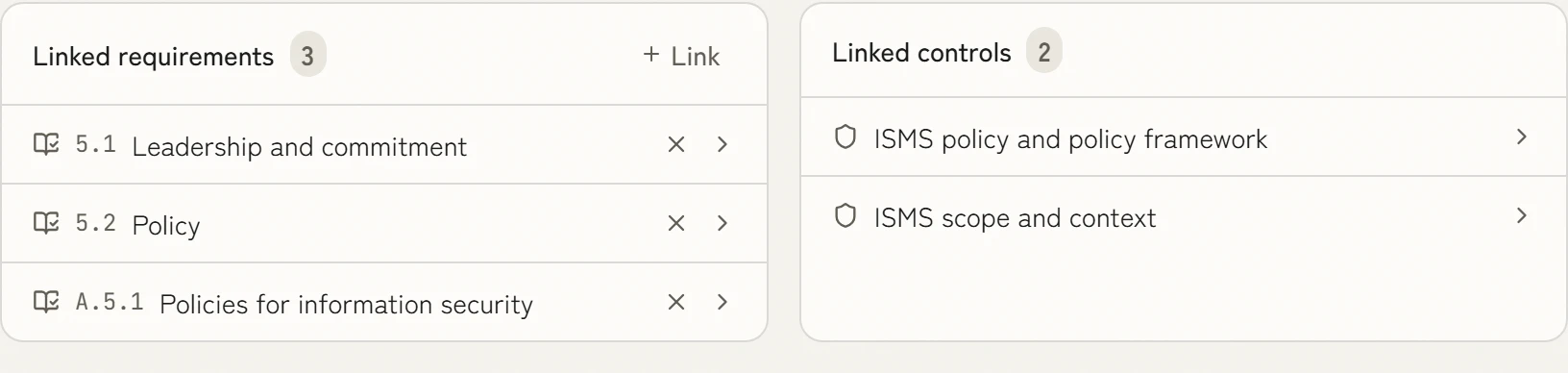
KaitoSec imports the working state you already have and connects it progressively. Owners see their next task; security retains the professional depth; audit receives the approved state rather than a folder assembled at the last minute.
ISO 27001, IT-Grundschutz and TISAX in one ISMS
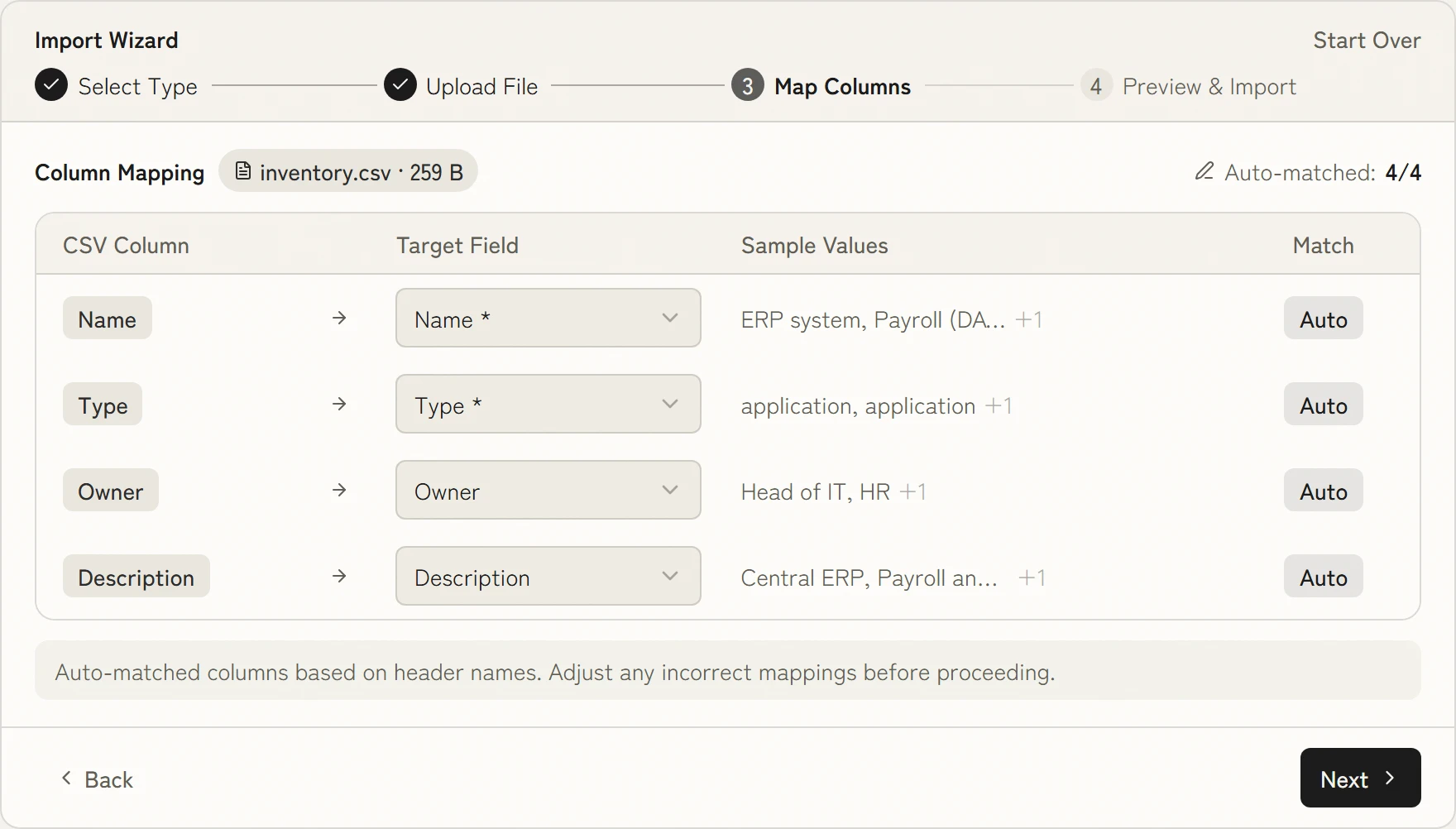
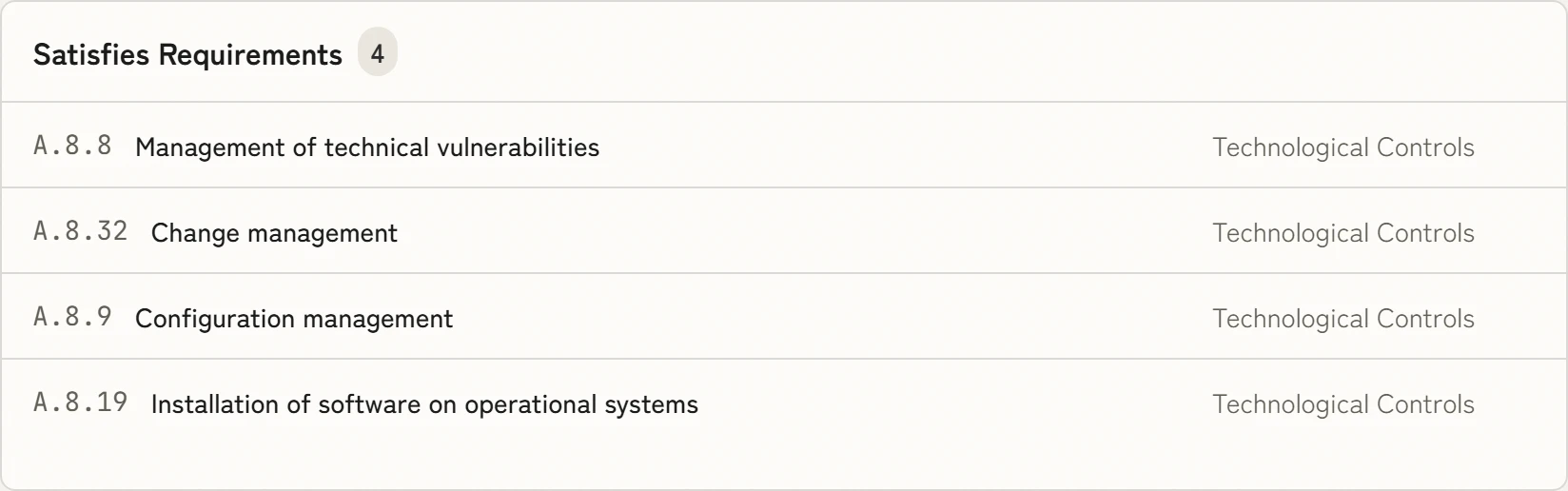
The standards differ, but much of the underlying work is the same. KaitoSec keeps each requirement distinct while linking genuine overlap to the same policy, control and evidence. One implementation can therefore support several obligations without hiding their differences.
Start with ISO 27001, the BSI IT-Grundschutz methodology or TISAX and add NIS2 as your scope changes. The existing asset inventory, risk decisions and evidence trail carry forward instead of being copied into another register.
Roles: information security officer, CISO and data protection officer
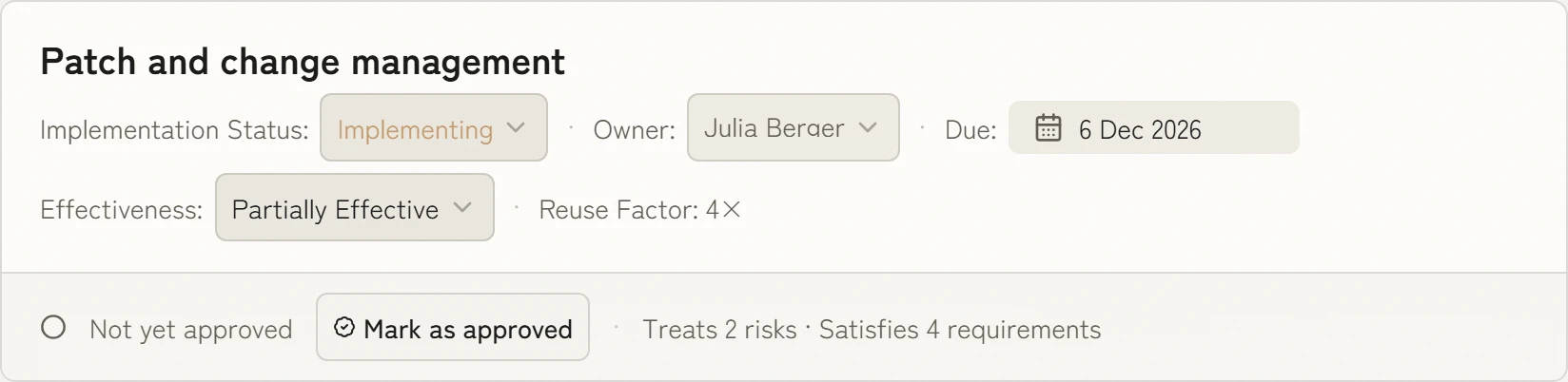
The information security officer steers the ISMS, while control owners, process owners and leadership make the decisions assigned to them. A CISO needs the consolidated risk picture; a data protection officer needs access to the linked processing and control context without losing role independence.
KaitoSec presents the same record at the depth each role needs. Responsibility, due date, review and approval remain visible, so collaboration does not turn into shared-account ambiguity. The security officer and CISO solution shows how this division of work looks in practice.
Comparing ISMS software
Compare tools by the work they remove after go-live: standards coverage, risk methodology, evidence versioning, approvals, import paths, audit access and links to continuity, privacy and supplier management. The ISMS tool comparison makes those differences visible by category.
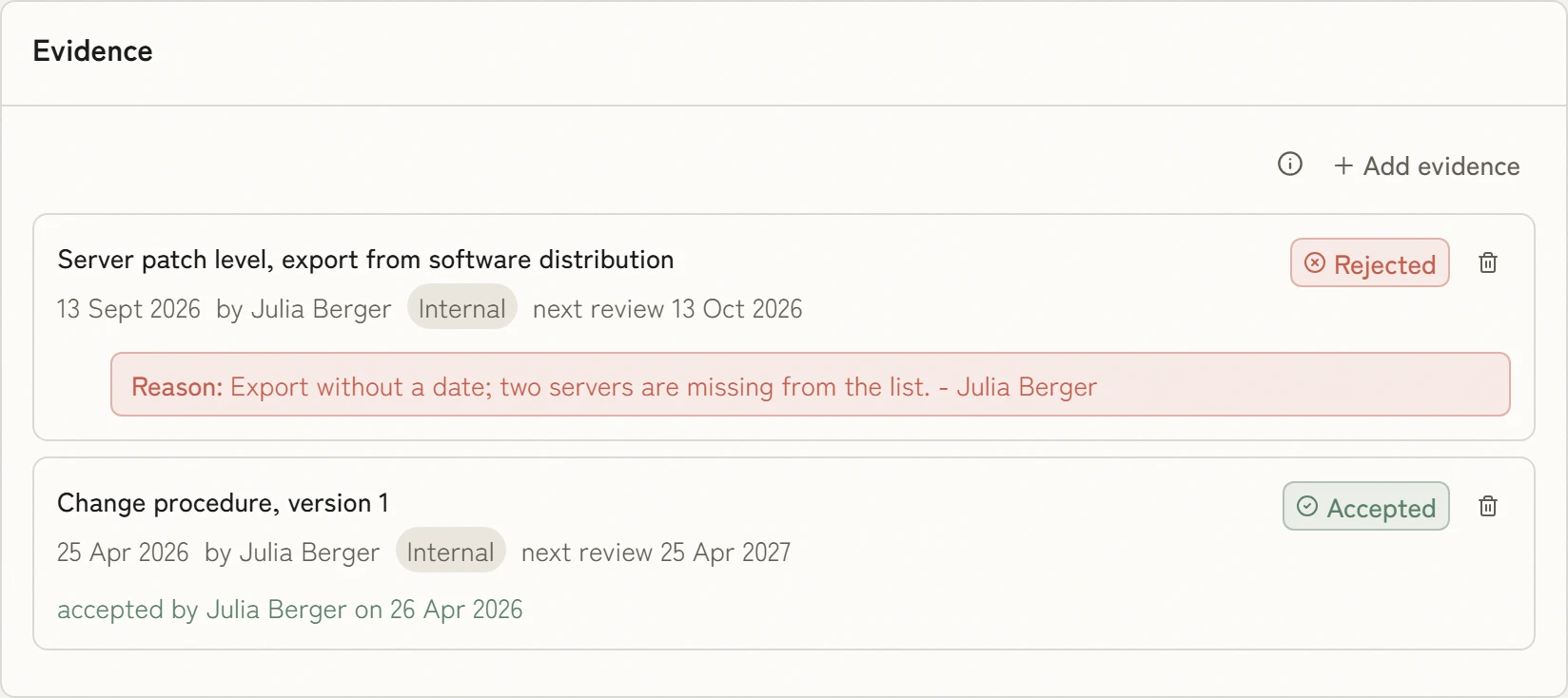
Ask vendors to demonstrate one complete chain with your data: import an asset, assess a risk, assign treatment, approve evidence and open the resulting audit view. A demo reveals whether the product is an operating ISMS or another place to maintain duplicate records.
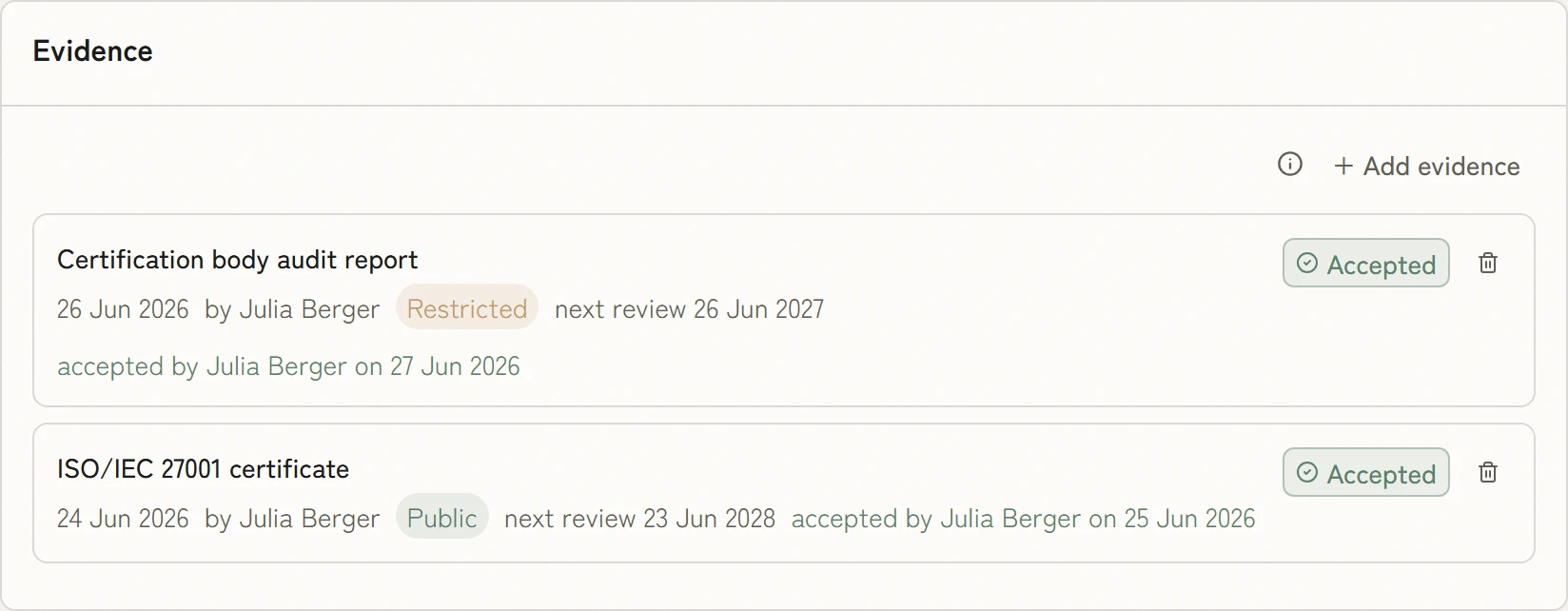
The evidence comes from the systems you already use.
100+ integrations
All integrations















Matching standards and modules
Relevant requirements
How KaitoSec supports the work
Frequently asked questions about ISMS software
What is an ISMS?
An information security management system (ISMS) is the systematic framework of policies, roles, risk assessments, controls and evidence that an organisation uses to steer information security. It is usually based on ISO 27001 or BSI IT-Grundschutz.
Why do you need ISMS software?
ISMS software prevents responsibilities, status and evidence from becoming disconnected across Excel, Word and SharePoint. It keeps them in one data model and makes the current state verifiable at any time. The ISMS tool comparison shows which capabilities matter in daily operations.
What should good ISMS software be able to do?
Good ISMS software covers asset and process registers, risk management, control tracking, policy management, evidence, compliance mapping across several standards and reporting for management and audit.
What is the information security officer's role in an ISMS?
The information security officer operates the ISMS, while management remains accountable for it. KaitoSec gives the security officer a working view and management a reporting view of the same data. See ISB and CISO for the division of responsibilities.
How does an ISMS differ from a BCMS and a DSMS?
An ISMS protects information, a BCMS protects business processes during disruption, and a DSMS protects personal data. All three share many of the same assets, processes and suppliers, so KaitoSec manages them in one data model.

Bring calm to your working week.
A personal demo in 30 minutes: we go through your scope and show how policies, risks and evidence come together in one state.